Where Did These Dark Spots Come From? Fading Sun Spots After an Oklahoma Summer

Where Did These Dark Spots Come From? Fading Sun Spots After an Oklahoma Summer
Updated October 2026
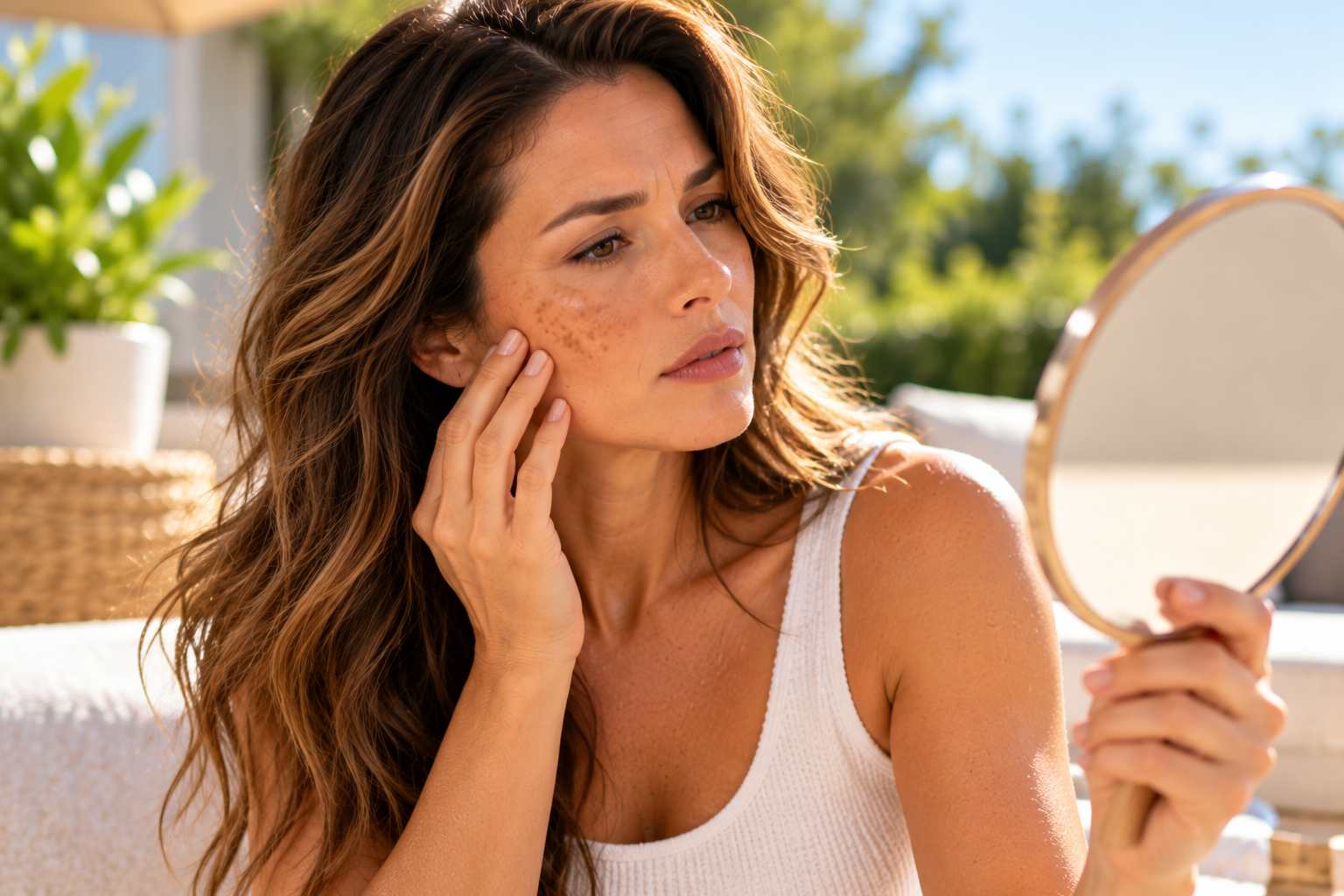
Every fall, it happens. The pool bags get put away, the lake weekends wind down, and suddenly you notice them: new brown spots on your cheeks, across your nose, on the backs of your hands, or scattered over your chest and shoulders. They were not there in April. Or were they?
Dark spots from sun exposure are one of the most common reasons Tulsa adults book a skin visit in autumn. The good news is that sun spots often respond well to light and laser treatment. The important news is that not every dark spot is a sun spot, and some need a medical evaluation first. This guide covers both, with a look at how these spots tend to show up differently for men and women.
What Causes Dark Spots on the Face and Hands?
Most flat brown spots that appear on sun-exposed skin are caused by cumulative UV exposure. Sunlight triggers pigment cells to produce extra melanin, and over years that pigment clusters into visible spots known as sun spots, age spots, or solar lentigines.
They usually appear where the sun hits most often: the face, the backs of the hands, the forearms, the chest, and the shoulders. Freckles that darken in summer and fade in winter are related, but true sun spots tend to stick around year-round.
Oklahoma's long, bright summers make this a local issue. Strong UV from May through September, plus outdoor time at the Gathering Place, Turkey Mountain, golf courses, and area lakes, adds up quickly. Even daily driving matters, since UVA rays pass through car windows and can contribute to spots on the arm and face closest to the window.
Are All Dark Spots Just Sun Damage?
No. Most flat, uniform brown spots on sun-exposed skin are harmless, but any spot that is new, changing, irregular, itchy, or bleeding should be checked by a dermatologist or physician before it is treated cosmetically.
The American Academy of Dermatology's ABCDEs of melanoma are a helpful guide. Watch for asymmetry, irregular borders, uneven color, a larger diameter, and any evolution in size, shape, or color. Cosmetic treatments are meant for spots that have already been evaluated as benign.
It also helps to know that blotchy patches on the cheeks, forehead, or upper lip that appear in a symmetrical pattern may be melasma rather than sun spots. Melasma behaves differently and needs a different plan, which is why an in-person skin assessment matters before choosing any treatment.
Why Do Men Tend to Have More Sun Spots?
Many men simply get more unprotected sun. Daily sunscreen is often skipped, and outdoor work, yard work, hunting, fishing, and golf add up over decades.
For men in Tulsa, dark spots often show up in specific places:
- Forehead and scalp line, especially with thinning hair or short haircuts
- Tops of the ears and back of the neck, which hats often miss
- Left forearm and hand, from years of driving
- Cheeks and nose, from hours outdoors
Men also tend to want treatments that are low-fuss, without a long product routine. Light-based treatment for sun spots can be a good fit because it targets pigment directly, sessions are relatively quick, and daily life continues with some simple aftercare. The bigger habit change is sunscreen, and a lightweight, broad-spectrum SPF 30 or higher is the single most useful step for keeping new spots from forming.
Why Do Women Often Notice Spots on Their Hands and Chest?
Many women protect their faces carefully with sunscreen and makeup but forget the hands, neck, and chest. Over time, those areas can show more spots than the face, which can make skin look older than the rest of the complexion.
The chest and décolletage are especially exposed in summer clothing, and the backs of the hands get sun every time you drive, garden, or walk. Women who have spent years carefully treating their faces often find that sun spots on these "forgotten" areas become the most noticeable sign of sun damage. Luminate's hands treatment page covers options for that area in particular.
What Is the Best Treatment for Sun Spots?
For sun spots, age spots, and freckles, the two primary options at Luminate Clinic are Viora IPL, a broad-spectrum light treatment, and PicoSure Pro, a picosecond laser. Both target pigment, and the right choice depends on your skin tone, the type and depth of your spots, and your goals.
How Does Viora IPL Treat Sun Spots?
Viora IPL uses intense pulsed light, not a laser, to target pigment in sun spots and freckles. It is also used for redness and broken capillaries, which makes it a helpful option when sun damage shows up as both brown spots and redness. Treatments typically take about 30 minutes, and a series of three to five sessions spaced three to four weeks apart is common.
After IPL, brown spots usually darken and look a bit like coffee grounds before they flake off and fade over the following days. Mild redness or tingling is normal.
How Does PicoSure Pro Treat Dark Spots?
PicoSure Pro delivers ultra-short laser pulses that break up pigment with minimal heat. It is used for sun spots, age spots, freckles, and uneven pigment. A typical plan for skin concerns is about three to five sessions spaced four to six weeks apart, with redness, mild swelling, or temporary darkening of spots for one to three days.
Can Other Treatments Help?
Yes. Chemical peels, microneedling, and NOUVADerm can support a brighter, more even tone, particularly when spots are mixed with dullness or rough texture. Many people get the best results from a layered plan built during consultation. If peels are of interest, Luminate's earlier guide on whether a chemical peel can fade dark spots goes deeper on that option.
Is IPL or Laser Safe for My Skin Tone?
Light and laser treatments can carry a higher risk of burns or pigment changes in deeper or recently tanned skin. Your suitability, and which device fits you best, should be decided in person after a skin assessment.
This is a big reason fall and winter are popular seasons for spot treatment in Tulsa. Your summer tan has faded, you are spending less time outdoors, and it is easier to keep treated skin out of the sun while it heals. Tell your provider about recent sun exposure, self-tanner, medications that increase light sensitivity, and any history of cold sores or skin conditions.
How Do I Keep Dark Spots From Coming Back?
Treatment can fade existing spots, but new ones can form with continued sun exposure. Daily sun protection is what keeps results looking good.
- Use a broad-spectrum sunscreen with SPF 30 or higher every day, as the American Academy of Dermatology recommends
- Reapply when you are outdoors, sweating, or swimming
- Do not forget your hands, neck, chest, and ears
- Add a wide-brimmed hat and sunglasses for long Oklahoma afternoons
- Ask about home care products from ZO Skin Health or Skinbetter Science that support an even tone
You can read more about this concern on Luminate's pigmentation and sun damage page.
Dark Spot Questions We Hear Most
How many sessions does it take to fade sun spots?
Many people see improvement within a few sessions. IPL plans usually involve three to five sessions three to four weeks apart, and PicoSure Pro plans about three to five sessions four to six weeks apart.
Do sun spots go away on their own?
Seasonal freckles may lighten in winter, but true sun spots usually persist. Sun protection prevents new ones but rarely fades existing spots on its own.
Is there downtime after sun spot treatment?
Expect mild redness and spots that temporarily darken and then flake off over several days. Most people go back to work right away, though you will need to stay out of direct sun.
Can I treat dark spots on my hands?
Yes. Viora IPL, PicoSure Pro, and chemical peels are all options for spots on the hands.
When is the best time of year to treat sun spots in Tulsa?
Fall and winter are popular because sun exposure is lower and tans have faded, which makes treatment and healing easier to manage.
From Lake Days to Clear Days: Your Next Step
Sun spots are a souvenir of a life well lived outdoors, but you do not have to keep them. With a careful skin assessment, the right device for your skin, and solid sun habits, you can bring back a clearer, more even tone. Book your complimentary consultation at Luminate Clinic in Midtown Tulsa or call 918-340-7090. Clients from Jenks, Bixby, Broken Arrow, and Owasso are always welcome.